Free Newsletter Subscription
        BNC All Access

Tony Vinciquerra: Get to Know the Man at the Top of Fox's TV Food Chain

March 21, 2009

WHO: Tony Vinciquerra, Chairman and CEO, Fox Networks Group

WHERE: Spark Woodfire Grill, Los Angeles

WHEN: Monday, March 16, 2009

THE DISH: Fox Networks Group Chairman Tony Vinciquerra has been on the Mel’s Diner wish list for a while. That’s partly because he is one of the very few people who know every nook and cranny of the television business, from running local stations to the national networks.

He’s also been on our radar because even though he has long been a power in TV, overseeing for several years many of News Corp.’s most lucrative TV assets, he has purposely stayed out of the press — which he calls “distracting” — as much as possible.

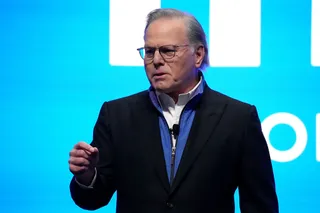
But Vinciquerra — Tony V., as some call him — agreed to sit for a long chat March 16, just days after he was handed the additional oversight of programming at the Fox broadcasting network as well as some 170 international channels in Rupert Murdoch’s major shakeup. The bold restructuring, announced March 12, made Vinciquerra the top domestic TV executive for News Corp., overseeing all of the Fox broadcast network, cable networks group and the international channels.Tony Vinciquerra

The move shocked members of the industry and employees of the company alike. It made Vinciquerra one of three executives essentially replacing his current boss, News Corp. President-COO Peter Chernin; it saw the TV studio report through the film studio; and it resulted in the dismissal of Fox Broadcasting Chairman Peter Liguori, replaced by Fox Searchlight film guru Peter Rice.

Over lunch at Spark Woodfire Grill in Los Angeles, Vinciquerra spoke candidly about his new role, his “new” boss, and what lies ahead for Fox and network television in general. Following is an edited transcript of that conversation.

How did they tell you about the re-org, and how involved were you in coming up with the new structure?
Not very. Rupert told me a couple of weeks, or three weeks ago, that Peter [Chernin] was not going to be extending his contract. And he wanted me to play a role in the company going forward; some of it was still to be determined, but he wanted to create a structure where he would have five or six people actually managing the businesses and he wanted me to be one of those people. So that’s how it got started, and it went from there. We had several conversations over the weeks prior about which businesses would best work together, and this is what we ended up with.

So did you celebrate after the announcement was made?
No, it was my daughter’s second birthday. That’s what we celebrated. If you haven’t noticed, I don’t care much about the Hollywood crap. The fun thing for me is going home and playing with the girls. One of the [reasons] I was a little hesitant in doing this is it’s going to be more travel. I am concerned about that.

What are the first things you need to do given your new responsibilities?
There’s really not a lot for me to do at the broadcast network, I’m not going to micromanage it. We have terrific people there. Kevin Reilly will continue to run the development team, which is very well established. Peter Rice obviously has to get up to speed. I’ll probably spend most of my time with Peter helping him get up to speed, and I’m sure he’ll do that fast because he’s a smart guy and gets the overall business. He really asks all the right questions. On the other pieces, the international channels, I was already doing some of that with National Geographic. I need to get to know the people in that group much better. There’s 170 channels around the world. So that’s the biggest ramp-up for me.

What will it be like now reporting to Rupert Murdoch instead of Peter Chernin?
Peter and I had a long-standing relationship, and I cherish it. Now it will be different.
Rupert is in New York, he’s not here [in Los Angeles]. So I’m going to have to be spending a lot more time in New York. And he has other demands. Peter was able to focus more on the businesses that I was involved with; [Murdoch is] not going to be able to focus as much just because of the demands on his time. I’m also looking forward to sitting in a room with Rupert a lot more frequently. He’s a genius who has done amazing things, and it’s going to be exciting to sit there with a professor like Rupert.

How much time have you spent with him in the past?
Quite a bit, obviously. I’ve been overseeing a pretty big part of the business. But it was generally very broad, very strategic conversations as opposed to the nitty-gritty of the business. I always found him to be extremely collegial and respectful of your time. He’ll walk in my office and I’ll be on the phone, and he’ll say, “Hey, would you mind calling me when you’re off?” Many people would just walk in and sit there. He’s very respectful of what you’re doing. He’s a very different person than what you see out there.

Do you anticipate more restructuring of your area?
No. Within the company we’ll do other things, but I don’t see any changes in my group. One thing I’ve really prided myself in is as I’ve taken over businesses, I haven’t really made wholesale changes, never really made much change at all. I took it as a challenge if the business wasn’t doing well, and tried to make that group better. Over time you have to make some changes. I don’t think anybody wakes up in the morning and says, “I really suck at my job, and I’m going to do terrible and awful things.” [You mostly] have smart, intelligent, focused people in those positions-[but] sometimes you don’t. Then you have to make changes.

I know you’ve been involved in the creative process-picking pilots, making scheduling decisions-for a long time at the broadcast network as well as the cable networks. How will that ramp up with the new duties?
The way I see it, Chernin is still there until June, and I will be immensely respectful of that. You learn something in every encounter with him. So until then, he’s still in charge and will guide what we do. So once he leaves, I think I just go to the place that he’s at, the moderator or the whatever, the arbitrator at the end. Whatever is necessary. Give my opinion-I always have anyway.

So Chernin is staying very involved?
He’s a remarkably responsible person, so I know he wants to make sure all goes well. He has said to me whatever help or guidance I need or questions I have, don’t hesitate to ask him. He wants to remain involved. And he’s going to be involved once he’s gone because he has the production deal at the studio.

As far as you know, there will be no direct successor to Chernin for the time being, correct?
As far as I know.

Do you expect Rupert to be more involved in pilot season during this transition?
He always has been pretty involved. There were a couple of years he wasn’t. There have been a couple of years when he was traveling or something, but even when he wasn’t directly involved in the meetings, he would take the pilots and make his opinion known. He’s always been involved. I think he will probably be even a little more involved this year, simply because he’d want to be there because two of us are new in these positions and Peter Rice is totally new to the network. As an aside, people have said I’m new to the programming, have no programming background. I’m like, “What have I been doing?”

How well do you know Peter Rice?
Not terribly well. I’ve known him for four or five years, and we’ve had a couple of meals together. He’s very smart but I don’t know him terribly well. But I’ll obviously get to know him pretty well, as well as I can.

What is job one for him?
To get up to speed on the development cycle.

How are you bringing him up to speed?
By attaching the fire hose to his mouth. I’ve had a number of meetings with him already. He’s met with all the staff…he’s got the budget books and the strategic planning materials, and I’m sure he’s getting meeting requests. The agents I’m sure are all over him trying to set up time to visit. And we’ll meet a couple of times a week for the next little while along with Chernin, who will also help get him up to speed.

How do you see this setup with Rice and Reilly working?
I’m hoping they work out a really good working relationship because they’re both very talented people and would hope to have them both stay in the company for a long time to come. Kevin’s got a great attitude about it, very positive. Knowing both of them, they both have great sensibilities about programming and a great gut on programming. I don’t know how well they know each other. I don’t think they know each other terribly well, but I know they’ve been in meetings together and obviously worked together on the lot. They have different personalities, but I think they come from the same place from the programming perspective. If they’re able to work out a good working relationship and develop some chemistry, I think they’ll be a real impactful duo.

There are things on the shelf such as Moment of Truth. There’s also a perception in the marketplace that Kevin Reilly is not so much a fan of the sort of reality programming that Fox has made some hay with, and that Rice may share that taste. What will come of those sorts of things?
There are shows that are on the network that you have second thoughts about putting on again, but the network is broad and diverse and you’ll continue to see things on the network that stretch the line a little bit. You never want to put on anything that’s embarrassing or you think is embarrassing. You’ll see diversity on the network, but this is really more Peter Rice’s decision, and he and Kevin will work that stuff out.

How is Reilly doing with his mission to revamp development season?
That’s been a company strategy-and I think we’re doing pretty well with it. The reason is when you’re developing 10 programs at once, you can’t love them all very well. If you’re developing two or three, you can spend a lot more time, a lot more effort, a lot more care on those programs. You get the entire business thinking about it, the collective brain power of your good thinkers focused on one project or two projects or three projects. Having a year where you produce 40 pilots, which one of our competitors did last year, how do you make sure that they’re all developed and nurtured and brought to life?

Ratings on Fox were down in its core demo before American Idol came back. Are you concerned?
It’s a worry. All the networks are down this year for whatever reason. But yeah, we’re concerned about it. But it’s not that big a surprise to anyone because 10 years ago the average household had about 50 channels to watch. Now there are 120, so it’s not surprising that the ratings are down. But on the other hand, advertisers are very aware that they need to work with us to have the reach to launch products and market products, and we’re very aware of that as well. So we’re doing everything we can to figure out what consumers are looking for and develop more hit products and more hit programs, and we’ll draw more viewers to us again.

One of your counterparts says the broadcast-network TV model is dying; another says everything is sunny. Where do you come down on that?
I don’t think it’s dying. I think it’s under great stress. I think there are lots of issues that need to be dealt with, but there are several roads to keeping it viable as far as I can see into the future. But certainly there are issues. Going from 50 channels to 120 channels is a big enough issue on its own.

How will the upfront selling season be this year?
I think the upfront is going to be OK this year. It’s not going to be robust. Probably going to be off slightly, but one of the advantages is NBC is taking five hours out of the mix [by moving Jay Leno to 10 p.m.].

Will you and other networks hold more inventory out of the upfront?
It depends on what the demand looks like. I believe that there will be significant demand because advertisers we’ve been talking to are saying they need to make sure they have enough inventory to meet the demands of all the clients they serve. There are only four or five buying groups now and they represent 80 or 90 different clients, so they need to make sure they have enough inventory to ensure their product gets marketed appropriately. So I think there’s going to be a significant demand. We may sell a little bit less, but I don’t think it will be significantly less.

Will you cross more shows over between the network and the cable outlets?
There’s a show on Speed called Pinks. We’ve been trying to figure out a place to put it on the broadcast network, and we just haven’t found the right moment. It’s a car racing show, but it’s more about the people. The concept of the show is you race your car against my car, and the winner gets the other person’s car. “Pinks” like pink slips.

What do you think of Jeff Bewkes’ “TV Everywhere” concept?
I’m not sure I understood everything he was talking about. I don’t mean that in a negative way at all. The core of it really is this authentication process. We actually started going out six or eight months ago and talking to cable companies about it, trying to find a way to not cause the cable companies to be against Hulu or Fox.com. The cable companies, you’ve got to remember, we know where our bread is buttered. The cable companies pay us a lot of money for our cable product, and they also pay us in retransmission equity for the broadcast network. So we know that we have to keep them with us on this. We don’t want to do anything to cause them to say, hey, we’re paying you for this programming and you’re giving it away-and encouraging people to not subscribe to our services. I think that’s at the core of what Jeff is talking about. I mean, he put a nice name on it, but it’s something we’ve been talking about for a long time.

Will you move into Peter Chernin’s office?
The building I’m in is the network and my stuff, and the film company is across the street. So it’s interesting…the building is one of my responsibilities and I’m not planning to move anybody. I’m guessing [Chernin’s] office will stay empty unless Rupert decides somebody else goes in.

So is now a time to be bold or conservative?
Everybody talks about how you get into the recession and you’ve got to do things differently. I don’t think that is the answer. I think the answer, having been through a number of these things, is yes, you try to find ways to bring other advertising genres to the medium, you try to find ways to produce programming a little better, but you don’t change the tires on the car while it’s moving down the road. You try to do what you’re doing much better than your competition. You should be bold on some things, but not on all of them.

What do you think of Hulu?
I think [Hulu CEO] Jason [Kilar] has done a remarkable job developing the business. It’s incredibly user-friendly. It’s obvious that the consumer response has been terrific. I do think there’s a business future there; we need to get more product on there. We need to balance the advertising return of Hulu with the network to make sure they’re not completely out of whack, and I think over time they’ll complement each other nicely.

Is streaming shows online for free cannibalizing audiences?
I don’t know if you can say that. We really don’t know. We’re still in the first innings of all this stuff. Chernin has said a number of times it’s a way to repeat programming you can’t repeat on the networks anymore. Anything that is at all serialized can’t be aired on the network as a repeat, because nobody will watch it, or not many people will watch it. So you have to find another use for that product, and this is a very good use of that product.

How will the reorganization help different divisions like film and the network work together?sorbet at Spark Woodfire Grill
Finding ways to reduce the cost on production. Who knows what they’ll come up with, but obviously on both the movie and the TV side, we need to figure out how to produce these shows and movies in a more efficient way. That’s no news to anybody. But on the cable and broadcast side, over the past several years we’ve been integrating the businesses, and to do that we’re finding more efficient ways to run the businesses, better ways to promote the businesses and how to work better together.

DINED ON: Spark is a fitting spot to meet Vinciquerra, not just because it’s up the road from the Fox lot on Pico, but because like him it’s well-regarded without being part of the Hollywood scene. Call it the anti-Ivy. I did, however, overhear a conversation at another table about Peter Chernin leaving News Corp. Vinciquerra and I both had variations on the Caesar salad and admired the glass that my sorbet dessert arrived in (pictured).

VIDEO  Why Tony V. says reporting directly to Rupert will be the biggest change for him in the new structure.

Mel’s Diner: Tony Vinciquerra, Chairman and CEO Fox Networks Group from Broadcasting & Cable on Vimeo.

BE A SUPER FLY CORRESPONDENT, tip us off to where the TV biz eats — industry bigwigs, talent, anybody working in TV in your town — with a note to tellmelsdiner@reedbusiness.com. We’ll keep your Fly on the Wall tips anonymous, just ask.

Posted by Melissa Grego on March 21, 2009 | Comments (0)
POST A COMMENT
Display Name
captcha

Before submitting this form, please type the characters displayed above. Note the letters are case sensitive:

Advertisement


Advertisement


About Us   |   Advertising Info   |   Site Map   |   Contact Us   |   Affiliate Links   |   RSS
© 2013 NewBay Media, LLC. 28 East 28th Street, 12th floor, New York, NY 10016 T (212) 378-0400 F (212) 378-0470
Use of this website is subject to its Terms of Use | Privacy Policy