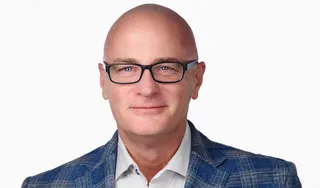
Rogovin Courts the Media Mavens
Beltway bigwig lawyer cut his teeth at the FCC
By Bill McConnell -- Broadcasting & Cable, 8/7/2005 8:00:00 PM
While law firm Wilmer Cutler Pickering Hale and Dorr is known for its expertise in litigation, antitrust, securities and taxation law, it was once a major force in media legal work, representing such clients as Capital Cities/ABC, Times-Mirror and the Chris-Craft TV station group. But as those companies were taken over, the firm's media practice dwindled. Former FCC General Counsel John Rogovin vows to bring that business back.
The 1,000-plus attorney firm hired Rogovin as a partner and hopes he'll lure in broadcast, cable and satellite clients. “Like a lot of firms, [Wilmer Cutler] has been hot in particular practice areas at various times, and others not,” says Rogovin. “Two areas I'm hoping to focus on are wireless and media practice.”
Wilmer has added three major broadcast, wireless and satellite clients of late, though Rogovin won't say who they are.
THE FCC DAYS
Rogovin took the job at Wilmer Cutler after more than three years at the FCC, which he joined in 2001 when then-Chairman Michael Powell, whom he'd worked with at law firm O'Melveny & Myers, named him deputy general counsel. Rogovin became general counsel in 2003 when Jane Mago left to join the National Association of Broadcasters.
From the beginning, Mago says Rogovin acted as the co-general counsel, especially in telephone-related proceedings, since conflicts of interest forced Mago to recuse herself. (Her husband is a regulatory attorney for BellSouth.)
“He is a fabulous litigator and has an exceptional legal mind,” Mago says. “We also loved Rogo's dry sense of humor.”
Rogovin, whose wife, Jaye, consults for such clients as PBS Kids and BBC, counts three major legal proceedings as his most rewarding experiences at the FCC. Topping the list was the lengthy court battle to defend the FCC's decision not to impose “open access” on cable operators' Internet services. ISP Brand X, Earthlink and others sued the FCC in federal court to reverse the policy, which the FCC argued was necessary as an incentive for cable companies to quickly roll out high-speed Internet service.
Rogovin argued the FCC's case before federal appeals judges and lost, but his arguments ultimately prevailed when the Supreme Court upheld the FCC's policy in June—though Rogovin had since left for Wilmer Cutler.
“It was very exciting to help the commission pave the way for a new generation of services,” he says. “Ultimately, the general counsel is there to get the commission where it wants to go as a policy matter.”
Rogovin says he also found tremendous satisfaction in negotiating a settlement that allowed the FCC to reclaim wireless spectrum from bankrupt Nextwave Telecom; the FCC had haggled on this for years. “Getting [the spectrum] into the hands of operators and carriers who can do something with it, getting us out of the bankruptcy ditch and getting the government paid,” he says, “turned a bad situation into a good one.”
A native of the Washington area, Rogovin followed his father, Mitchell, into law. The elder Rogovin made a name for himself as he took on what seemed to many in the capital a string of contradictory posts: He served as a senior attorney for such agencies as the IRS and CIA but also was a staunch advocate for open government, serving as general counsel for Common Cause and defending New York Times reporter Neil Sheehan in the Pentagon Papers case.
“My father had an exciting practice,” the younger Rogovin says, “and it looked like a lot of fun.”
He considered working with his father after he graduated from law school in 1987, but his father discouraged the idea. Says Rogovin, “He told me, 'If you're any good, you can do better. If you're not, I don't need you.'”
GOING TO BATTLE FOR THE CLINTONS
Growing up amidst the Washington establishment—and attending the city's tony Episcopalian prep school—threw a wrinkle into the 44-year-old Rogovin's upbringing. Although raised Jewish, he only recently had his bar mitzvah. He says, “It wasn't something a lot of us were doing at St. Albans.”
After stints as a judge's law clerk and an associate at a law firm, Rogovin went to work at the Justice Department in 1993 as a deputy assistant attorney general in the civil-litigation division. He led a unit of 100 lawyers defending the government against legal challenges to federal statutes and programs. His assignments included waging Hillary Clinton's battle to protect the confidentiality of documents generated by the health-care task force she led in the early days of her husband's presidency, and defending the Clinton administration's “Don't Ask, Don't Tell” policy regarding gays in the military.
At Justice, Rogovin also met several lawyers who are now his colleagues at Wilmer Cutler, including such luminaries as Jamie Gorelick, Justice's long-time second in command; renowned Supreme Court litigator Seth Waxman; and white-collar–crime expert and former FBI General Counsel Howard Shapiro.
After leaving the FCC, Rogovin chose to join Wilmer Cutler in part for the chance to work again with those old Justice Department friends, but also because of the firm's decision to ramp up its media and communications practice. “I was particularly interested in using my experience at the FCC to land in as many different communications areas as possible: litigation, transaction, regulation,” he says. “Wilmer has a dynamite base in all those.”