Log In   |  Register Free Newsletter Subscription
Skip navigation
Zibb
Subscribe to Broadcasting & Cable
RSS
Reprints/License
Print
Email

The Public Airwaves Myth

By Erwin G. Krasnow -- Broadcasting & Cable, 5/18/2008 8:00:00 PM

FCC Commissioners Michael Copps and Jonathan Adelstein, as well as citizen-group advocates, frequently proclaim that the airwaves belong to the people. Indeed, the concept of “public airwaves” is the foundation for the return to heavy-handed regulation proposed by Chairman Kevin Martin and his colleagues in the localism proceeding.

Late last month, the FCC released a revised edition of a manual entitled “The Public and Broadcasting: How to Get the Most Service from Your Local Station,” which broadcast stations are required to provide to any member of the public who requests a copy. The manual asserts, without any citation to legal authority, that station licensees are trustees of the public's airwaves.

The concept of public ownership of the airwaves is repeated over and over without a close examination as to whether the notion has any legal basis or makes any sense. As Franklin Delano Roosevelt once said, repetition does not transform a lie into the truth.

If you review the record, it is clear that Congress never intended for the public to control the airwaves. Here, for example, is Sen. Clarence Dill, one of the co-authors of the Radio Act of 1927, on the subject of ownership of the airwaves: “The government does not own the frequencies, as we call them, or the use of the frequencies. It only possesses the right to regulate the apparatus. We might declare that we own all the channels, but we do not.”

Or take the late Supreme Court Justice William O. Douglas. He debunked the argument that the government can control broadcasters because their channels use airspace by comparing broadcasters to people who speak in public parks—like the airwaves, also in the “public domain.” He added, “Yet people who speak there do not come under government censorship.”

Even the Congressional Research Service, which conducted a study of the problems raised by proposals to assess fees from broadcasters for use of the spectrum, concluded that “the notion that the public or the government owns the airwaves is without precedent. We find no case that so holds. Furthermore, when enacting the Radio Act of 1927, the Congress specifically deleted a House-passed “declaration of ownership.”

But if these arguments are not persuasive, think of the utter impossibility of anyone owning the airwaves. The radio frequency spectrum cannot be seen, touched or heard. Like sunlight and the wind, it has existed since the beginning of time—long before any person was around to claim it as their own. The spectrum—actually pulses of energy at different frequencies—cannot be contained, or divided, or held in any way. So how can anyone own or control it? The very idea is preposterous.

How, then, has the government been able to regulate broadcasting? Actually, the FCC's paternalistic control of radio and television slipped in the back door as an unwanted byproduct of a regulation that is, in fact, necessary for orderly use of the electromagnetic spectrum. (Yes, even those of us who advocate a hands-off approach to FCC regulation of broadcasters agree there is a place for some government supervision.) Without the FCC's rules on who can use what part of the spectrum, chaos would reign—signals would crash into each other, and clear communication could be impossible.

The late Harvard Law School Professor Louis Jaffe hit the nail squarely when he said: “The popular cliché that the broadcaster is using the public's airwaves is a vague, indeterminate concept. I think we would have heard little of it had not the existing technology required regulation of broadcasting to avoid interference. For, in one way or another, we all use air and space. To speak of owning such resources is a solecism.”

But the FCC, created to be the traffic cop of the airwaves, has taken on the role of a morals and vice squad. In the process, the electronic media, one of the most important voices in our society today, have been deprived of a basic constitutional right to freedom of speech.

None of this denies that the spectrum does have a special character, or that broadcasters have a special responsibility to use it in a way that is beneficial to society. In any event, the public still has recourse to stop a broadcaster that is doing a poor job. For one thing, there's that dial. Every time you change the channel, you are, in effect, voting for or against a station's programming. The public can also file petitions to deny a broadcaster's license at the FCC.

But the public does not own the airwaves. The spectrum is there, whether it is used or not. Only when it is enhanced by broadcasters filling the airwaves with information and entertainment does it have any value at all to the public. With their talent, technical knowledge and financial resources, broadcasters have increased the value of the spectrum for everyone. Without a signal, supplied by your local broadcast station, the airwaves are just so much empty space.

Author Information
Krasnow is a partner at Garvey Schubert Barer in Washington and former general counsel for the National Association of Broadcasters.
RSS
Reprints/License
Print
Email
Talkback
Related Content
Reed Business Information Resource Center

Featured Company


Related Resources

Advertisement
No content
More Content
  • Blogs
  • Photos
  • Podcasts

Sorry, no blogs are active for this topic.

VIEW ALL BLOGS RSS
Bell Blue

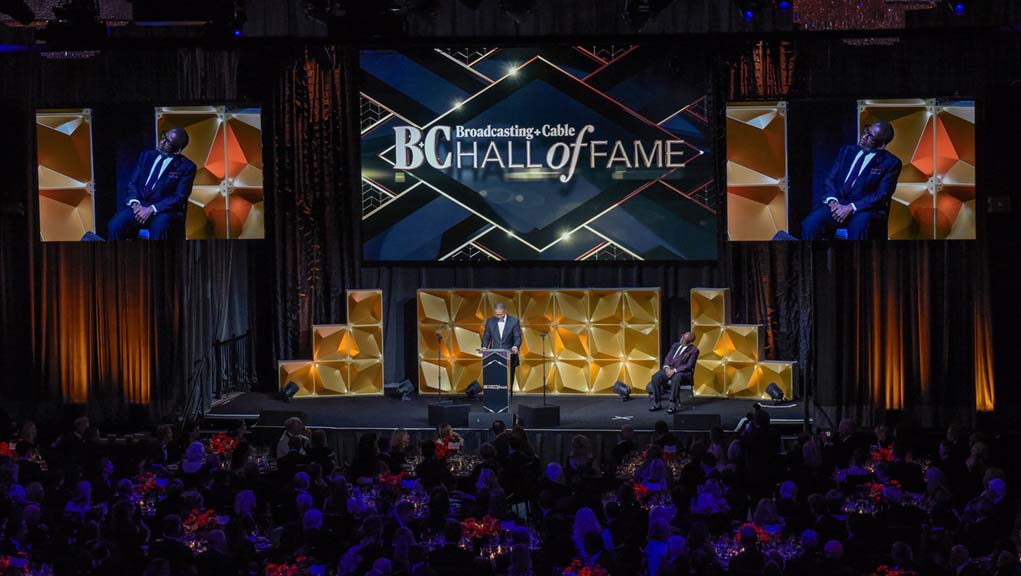
The Schmooze: B&C Hall of Fame Class of 2009

Members of the 2009 B&C Hall of Fame class receive their honors at the Waldorf-Astoria, Oct. 20, 2009.
ZuckerComcast

The Schmooze: 2009 B&C Hall of Fame

Photos from the 19th annual Broadcasting & Cable Hall of Fame gala at the Waldorf-Astoria in New York, Oct. 20, 2009.
News Corp. President and COO Chase Carey at the OnScreen Media Summit 2009

OnScreen Media Summit 2009

Photos from the B&C/Multichannel News day-long event on Oct. 21 at New York's Edison Ballroom. (Photos by Joshua Kristal, www.joshuakristal.com.)

Fall 2009 Hispanic Guide
Advertisement
BC Subscribe
B&C NEWSLETTER
B&C Today
HD Update
Cable Technology
VOD Newsletter
Hispanic TV Update
TechTalk
HD Programming
Multicultural Newsletter
B&C NewsCentral
Television Careers


Please read our Privacy Policy

About Us   |   Advertising Info   |   Submissions   |   Site Map   |   Contact Us   |   Affiliate Links   |   RSS
© 2009 Reed Business Information, a division of Reed Elsevier Inc. All rights reserved.
Use of this Web site is subject to its Terms of Use | Privacy Policy
Please visit these other Reed Business sites