Strickling Points to ITU for Conference 'Failure'
Says telecom union failed to deliver on promises of consensus and keeping Internet issues out of treaty
By John Eggerton -- Broadcasting & Cable, 12/14/2012 3:07:57 PM
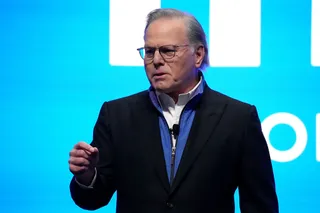
The head of the Obama administration's top telecom advisory entity says the WCIT-12 telecom treaty conference was a failure, and pointed a finger at the International Telecommunications Union (ITU).Larry Strickling, head of the National Telecommunications & Information Administration and a member of the WCIT delegation, said in a speech to the PLI/FCBA Telecommunications Policy & Regulation Institute in Washington on Friday that ITU failed to deliver on two promises -- "that it would operate by consensus and that Internet issues would not be appropriate for inclusion in the ITRs. As it turned out, the ITU could not deliver on either of these promises."
The U.S. and more than 50 other countries refused to sign the revisions to almost 25-year-old International Telecommunications Regulations (ITRs) due to Internet-related language that could be used by some countries to justify government Internet governance and possible censorship.
The good news, he suggested, is that it is not unusual for the ITRs not to apply to all ITU members. For example, the U.S. didn't sign them until 1973 and they were first drafted in 1850 (yes, 1850).
In addition, the 1988 ITRs remain in effect until January 2015.
That said, it remains to be seen, he pointed out, what effect they would have on businesses doing business in the signatory countries.
"I would suggest that to the extent the new language gives some nations the prod to make substantial changes in the way they deal with the Internet within their borders and in their international relations," he said, "those changes likely are not sustainable in the long run given how interconnected the world has become and the need for all nations and their economies to be integrated into this global interconnection for them to succeed."
He was echoing the sentiments of Ambassador Terry Kramer, head of the U.S. delegation Thursday (Dec. 13), when the U.S. signaled it could not support the treaty.
Also like Kramer, Strickling suggested that the marching orders of those who support the multistakeholder model of Internet governance is to make that case to those who are concerned about issues like span, child porn and sustainable infrastructure development, who would be open to finding solutions. The U.S. case is that those need to be addressed, just not in the context of ITU telecommunications treaties. "Our challenge, starting now, is to work hard to increase the number of countries that support the multistakeholder model," he said.
Talkback
No related content found.
Most Popular Pages
-
No Top Articles
Featured Company
-
Digital Rapids
Digital Rapids provides market-leading software and hardware solutions, technology and expertise for transforming live and on-demand video to reach wider audiences on the latest viewing platforms more efficiently, more effectively and more profitably. Empowering applications from..more