NAB: Warner Bros.' Rosenblum: "We Are in the Golden Age of TV...Again"
Strong international markets, healthy U.S. broadcast, cable and syndication sectors and new digital outlets bring in the gold
By George Winslow -- Broadcasting & Cable, 4/17/2012 5:11:53 PM
Complete Coverage: 2012 NAB ShowVIDEO: Click Here to Watch the Q&A
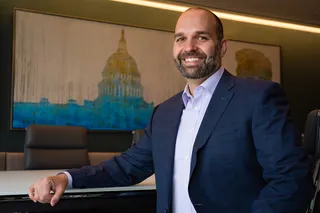
Bruce Rosenblum, president, Warner Bros. Television Group and office of the president, Warner Bros. Entertainment, argued that the TV industry was in a new golden age, both in terms of the creativity of the shows being produced for broadcast and cable, and in terms of the business.
That came in a wide-ranging discussion of the state of the TV industry at the NAB Show Tuesday in Las Vegas with B&C executive editor Melissa Grego.
"The business has never been better," Rosenblum noted. "Revenue from international has improved dramatically. The domestic broadcast, cable and syndication businesses are at a high point and there are new buyers" in the market like Netflix and Hulu that are boosting the value of their libraries and new productions.
He particularly singled out international markets, which now comprises nearly one-third of their revenue, as playing a key role in reducing deficits between the cost of producing shows and the license fees paid by the networks.
"Even in a global financial crisis, we have had five years of meaningful increases," to the point where the revenue "from international more than covers the production costs of our entire sales of 26 shows," he said.
Rosenblum also cited the growing importance of digital players like Netflix and Hulu, which he prefers to call subscription VOD (SVOD) outlets, as a new distribution channel for library product and new shows.
While revenues from these outlets remain small compared to their overall business, he said "it was probably true" that the large Hulu and Netflix deals for CW content "saved the network."
At the same time, exposure of the shows on Hulu and Netflix has also helped promote them and expand their audiences. This has been a net "positive for affiliates as we have more money to invest in programming," he noted.
Local broadcast stations are currently probably "the most challenged" part of the TV industry, Rosenblum noted. "Local ad market was hit the hardest [by the economy] and amount of competition they face in news and sports has increased."
When asked if retransmission consent payments might increase the license fees paid for the studio's content, he said that "Anything that helps create a healthy...business is good for those of us that produce content."
While most of the major studios are part of larger media empires that own a major broadcast network, Rosenblum noted that there were a number of competitive advantages to being independent. Besides making it easier for them to sell to all the networks, he also stressed that it has made it easier to attract top talent because creatives can produce for more than one network. "I like the hand I've been dealt," he said. "We've gone very well."
Rosenblum also stressed the growing importance of social media in their marketing efforts.
"I haven't seen Facebook and Twitter having an impact yet on what gets selected" by the networks, he said. "Where Facebook and Twitter can help is when you have shows that are on bubble. Several shows have gotten renewed [in recent years] because networks were aware of how much chatter was out there."
Because of the importance of social media as a marketing tool, he also noted that they have several full-time executives in the marketing department "to deal with it."
Talkback
No related content found.
Most Popular Pages
-
No Top Articles
Featured Company
-
Digital Rapids
Digital Rapids provides market-leading software and hardware solutions, technology and expertise for transforming live and on-demand video to reach wider audiences on the latest viewing platforms more efficiently, more effectively and more profitably. Empowering applications from..more