Spectrum Policy Gets Diverse Treatment at Broadband Conference
NAB's Ornelas: over-the-air viewership is growing, not shrinking
By John Eggerton -- Broadcasting & Cable, 1/26/2012 8:31:40 PM
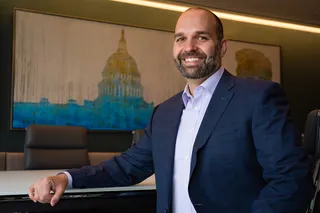
Representatives of the cable and broadcast industries Thursday made the case for why those technologies would be key players in the wireless broadband space.Speaking at a spectrum reallocation panel at the Minority Media & Telecommunications council's Broadband and Social Justice Summit in Washington, NAB's Chris Ornelas said that broadcasting could help offload wireless capacity that over-the-air broadcasters continued to serve a diverse population that should not be forgotten in the rush for "spectrum, spectrum, spectrum," and that the over-the-air viewership was growing, not shrinking.
Ornelas, correcting the moderator's mispronunciation of his name, said that he could be referred to as the "Keeping Americans safe during times of emergency Chris."-- Christopher Guttman-McCabe of CTIA was also on the panel.
He said broadcasters were "happy to be part of the solution: if there was a need for more spectrum to "sate the congested networks that the wireless folks are operating on today."
He also said NAB had "no objection" to folks who want to get out of the broadcasting business, but that what it wants to insure is protecting the people who want to stay and their viewers.
McCabe-Guttman had talked about reclaiming spectrum -- in this case it would be from broadcasters -- for a higher, better use. Ornelas said that while he appreciated the comments by panelist Blair Levin, FCC broadband plan architect and currently with the Aspen Institute, when he said the plan did not prejudge the value of broadcasting going forward. But Ornelas added that that profession notwithstanding, "since the day the plan was released, the conversation has been about nothing but the value of broadcasters and the continued utility of that service."
He suggested that conversation has usually included two points, which he disputes: 1) broadcasters aren't using the spectrum they have been given and 2) broadcasters have a "dwindling and insignificant" audience.
He countered that broadcasters have delivered on their DTV promise of HD and cool new services. He said there are now 1,800 multicast channels, many of which are significantly targeted to diverse communities with programming they can't find elsewhere. He also pointed to the mobile DTV buildout. He also said that protecting broadcasting is important because the over-the-air-only audience is disproportionately minority. "What we are concerned about is that, as the Congress and FCC move forward, folks who disproportionately rely upon our services are not disproportionately impacted by the polices and regulations issued to effect this auction."
He said Congress and the FCC will have "a big problem" if station repacking is not done "carefully."
James Assey of the National Cable & Telecommunications Association, reminded his audience that 99% of wireless service had a wired component and that robust wired buildout would make wireless more spectrum efficient.
Assey said that all the players were trying to figure out the best way to "map government-controlled assets in a way that marshals them to meet the demands and uses that customers are increasingly enjoying." That included making a pitch for unlicensed wireless, specifically wi fi. pointing out that cable operators were increasingly offering hot spots for their customers. He said 2012 would be the year for surpassing the one billion mark for number of devices with imbedded wi-fi chips.
When Ornelas said broadcasters supported spectrum incentive auctions, the comment drew a response from panelist Blair Levin, FCC broadband plan architect and currently with the Aspen Institute. He said he remembered it differently. "It is nice that they say they are supportive of incentive auctions. It wasn't quite the way I remembered it but I am glad they are now supportive."
Levin reiterated his concerns about House spectrum auction legislation that limits how the FCC can set up auctions, and that requires the FCC to make reasonable efforts to preserve the coverage areas and interference protections of broadcasters who do not give up spectrum for those auctions.
As he told B&C in an interview last year, he thinks the Congress should have written a one-sentence bill that gave the FCC the authority to compensate any broadcaster who gives up spectrum and give the FCC the hard job of coming up with the details, pointing out they are the experts at auctions. He said the current bill ties the FCC hands and gives broadcasters an avenue for endless litigation that could hold up the auction or reduce its take. In fact he said he would bet $100 dollars that if the bill remains in its current form, it will not score as high with congressional budgeters.
He said the argument, made by some House Republicans, that the FCC's desire to have the flexibility to put conditions on auction bidders is silly. "If the FCC were to propose auction rules or make any auction related decision that Congress did not like, Congress would have at least a year -- the minimum time it takes to go from rule-making to auction -- to take action to modify or reject the proposal, as Congress has in the past done."
Talkback
No related content found.
Most Popular Pages
-
No Top Articles