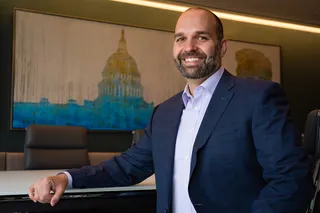
Not Containing Their 'Glee'
The chairmen of the studio behind the season’s biggest freshman hit believe their musical comedy is the next American Idol.
By Melissa Grego -- Broadcasting & Cable, 6/7/2010 12:01:00 AM
As Dana Walden and Gary Newman, chairmen of 20th Century Fox Television, plot their follow-up to a strong 2009-10 TV season for the News Corp. division, they will do so with orders for seven new series on the broadcast networks next season. In all, Walden and Newman are due to have 29 series in production in the 2010-11 TV season.Now it remains to be seen whether they can match a turn that saw them-in their first season in a decade without supervision from Peter Chernin-launch two of the biggest new hits on TV in Glee and Modern Family. Also on their to-do list: preventing overexposure of Glee, which Newman says he expects to sell into syndication "between now and next year"; Walden brashly says Glee has the potential to succeed American Idol as television's top-rated show.
In a candid conversation, the duo spoke with B&C Executive Editor Melissa Grego at their offices on the Fox lot about how they're defending against Glee becoming a one-season-wonder, why Chernin will probably return to a role as corporate czar, and what Ryan Murphy and Simon Cowell may be plotting. An edited transcript of the interview follows.
Do you worry about Glee becoming a one-season-wonder? Will the novelty of an hour-long musical comedy about the glee club wear thin?
Dana Walden: I don't worry that the novelty is going to wear off quickly. We are careful and sober about the potential shortcomings of something that's burning this brightly. As brand managers on this particular show, we turn down a lot of opportunities. It might not seem like it, but you can only imagine [it] if you see the opportunities that we have exploited so far. We have a truncated tour. There was an opportunity to take this show around the country, right now, and sell out arenas.
We, together with [Glee creator] Ryan Murphy, who has an incredible sense of what the right associations for this show are right now, are managing this brand to try to extend a successful life for as long as possible-just as we did with The Simpsons decades ago. You start with an incredibly good show, and Ryan has so many wonderful ideas. He's already pitched out the next 13 episodes of the next season, and the storytelling and the characters and the new characters that are being introduced to keep things feeling fresh.
He's a very contemporary storyteller, and that's one of reasons why I think the show is connecting with audiences, that these stories accelerate at a very quick pace. There's no navel-gazing. This is not soap opera of years before where one moment is mined over several episodes. It's how a younger demo consumes content and he's tapped into that.
By The Numbers (Click to enlarge)So, you don't worry he's going to burn through or run out of stories?
DW: Our
conversations are far more, "Can that be a three-episode arc, do we have to
dispense with that in one?" and he says, "Yes, because I'm on to something
new." He knows he has a big broad audience he has to connect with, and he knows
that every episode has to make the mother and father in the room feel nostalgic
and connected to the music while re-conceiving the music a little bit and
making sure it feels fresh and young.
American Idol, as lead-in, is a big part of Glee's success. Idol's finale rated its lowest since its first year, and Fox Entertainment President Kevin Reilly even noted at the upfront that it is aging. How much trouble is the Death Star in?
DW: It's hard to say. The appropriate and wise response on the part of the network was to schedule the show in a way next year that it has an opportunity to shine and to grow again. And by the way, it's still an incredible show. It's still an incredible performer.
But American Idol and Glee have many things in common. Thematically, they are shows that send a message that everybody is invited into the tent, everybody can have a chance to shine, everyone will be included. And it's a very optimistic, positive, contemporary message. They're celebratory of talent of how much people root for other people, even people that they don't know. And I think it's a very timely sentiment.
So, I think there are great reasons to be hopeful about American Idol, but I also commend Fox for having the next thing musically. They've got Glee. It wasn't like American Idol was declining and Fox has nothing to share in that space; they actually have the next show that is all about celebrating music.
The music industry is again looking to Fox as probably as strong a platform to launch artists as anywhere else-as [strong as] radio, as concerts. Fox maintained a hold on that particular market.
New Series Roster (Click to englarge)Do you think Glee could grow into American Idol's successor as the biggest show on television?
DW: Yes. I think Glee has enormous upside. I think it has the potential-I don't want to say to replace American Idol, because nothing can replace Idol-but in terms of being the top-rated show, I do think this show has the potential to grow to those kinds of heights.
I think American Idol will go on to be incredibly highly rated, but its successor was never going to be another competition show. That's not the way our business works.
Not X Factor?
DW: Potentially. I don't want to discount [X Factor creator and departing Idol judge] Simon [Cowell]. He clearly has also a remarkable ability to connect with the viewers of this country. But I will tell you that Simon invited Ryan to lunch at his house. They've had conversations about potentially working together in the future, and Simon's no fool. He recognizes that there's something about Glee that taps into all of the same things American Idol has tapped into.
Ryan is exclusive to 20th, so anything he did with Simon he would do with you essentially, correct?
DW: Look, it's very speculative. Ryan has a full plate, Simon has a full plate. I only said it to illustrate that even one of the biggest creative forces on that show recognizes that the shows have similar attributes. They connect with audiences on a similar level. They invite a very broad demographic of people.
Successful syndication sales, as you both well know, have a ton to do with timing and available resources among the buyers. You've got a third-season order already for Glee along with some strong numbers. There's some talk about your other freshman comedy, Modern Family, going next to market. Which makes most sense for your business to go first?
Gary Newman: Glee and Modern Family are really on different tracks. The story of [the sale of] Big Bang Theory is how strong the cable business is. There's not another comedy that had any real ratings power until Modern Family. And I think if this fall a new comedy doesn't pop, Modern Family will be an island for a course of three or four years before another show is that strong. So, I think it lends real power to [Modern Family], and it might suggest that [the company won't be] rushing to a deal-just as Big Bang didn't rush into a deal.
Now, there's nothing in the entertainment business that has the longevity of music. And Glee can be watched over and over again. I think the cable network that is willing to take the risk on it is going to be as richly rewarded as the Fox network is being rewarded right now by being a company that was willing to take a risk on a musical, platform it behind the biggest show in television and put that huge marketing campaign behind it.
In terms of timing, I think that Glee is likely to sell soon, as in sometime between now and maybe a year from now. It will be really interesting to see which of the cable networks has the vision to step up to it.
DW: There's an incredibly emotional connection between viewers of this show, and many viewers are executives at cable companies and their kids and their families. We have the live concert out on the road right now, in Los Angeles and New York, and a great number of executives from cable companies and stations groups jumped at the chance to take their families and be part of this event, which is an hour and a half where you don't sit down. People are on their feet. They're singing, they're dancing, they're swept up with all that is Glee. And that can't not translate into someone believing this is a huge opportunity for their company.
Is the company actively selling Glee?
GN: No.
Do you see Glee being sold exclusively to cable?
GN: I think it will probably take the form that hour syndication has in recent years, which is being stripped on cable and then being available on weekends in broadcast. If a station group had a different point of view and felt that it could strip the show, I'm sure it's something that [Twentieth Television President] Greg Meidel would entertain. But the likelihood is a more conventional structure.
The question is, who wants to identify themselves with a show about music, comedy, something that isn't easily pitchable. It isn't a procedural. It's an event show. It's a unique show.
There are several cable networks looking to broaden as the playing field has leveled between broadcast and cable; they want to be broader and more accessible to a large audience. We're already beginning to hear from different cable networks that you might not expect to be as aggressive as they are. There's a sense building that the show defies easy description in terms of what's right for it. I think there are going to be a bunch of companies competing for it.
Who are the likeliest candidates?
DW: What everyone saw with [the sale of] Big Bang Theory is companies like USA or the combined MTV Networks stepping up in a mighty way. I would anticipate that just as with Big Bang, there were cable groups that previously hadn't been in the running for an off-net half-hour coming to the forefront. Because they're all trying to build their brands, and they're all trying to acquire platforms to build their own programming off the back of it.
Do you expect Peter Chernin, who left News Corp. a year ago as president, COO and your direct boss, to remain working as an independent producer, or will he go run a big company again, as many people have speculated?
DW: It's very hard to imagine that at some point Peter won't again have an opportunity to do something incredibly meaningful and significant. That doesn't mean I don't think he won't be a focused, successful producer with us, but I do think there are probably huge opportunities awaiting his decision to get back into that type of work.
He's clearly an incredibly ambitious person. He has an incredibly dynamic and active brain, and you can see that in the company he has set up at News Corp. and what the Fox Entertainment Group looks like at this point in time; he's the person who put all those pieces into place. He is interested in these kinds of machinations. They drive him, and I don't think he's done with that yet.
Which of the networks got it right with their fall schedules, and which got it wrong?
DW: Fox and CBS have very interesting schedules. Both seem to be taking some shots, but wisely. Complacency is the enemy, and each of the networks right now has seen the downside of leaving long-running shows in prime time periods for too long. It's a business that goes from being incredibly network-centric to the network having to overpay to keep these long-running shows, and if you don't utilize those shows in their prime to launch new assets, you're wasting opportunities and creating problems for yourself down the road.
I also really applaud [ABC topper] Steve [McPherson] for sticking with Wednesday night in the face of huge competition. We are greatly indebted to him for his strength with Modern Family; Lord knows that all of us felt insecure when American Idol was scheduled right from the beginning of its run up against our little first-year show. We had a lot of conversations with Steve, and he said, "I'm not going to run from it because I believe in this show, and I think it's more important to demonstrate stability for our audience than it is to try to run from American Idol." He was exactly right.
Does NBC have the goods to turn it around?
GN: I have not seen a lot of their shows. I'm sure, as every year, some of them are quite good, some are probably works in progress. I think their challenge is it's almost impossible to launch as many shows as they're trying to launch. You just see it year in and year out-networks that try to launch a lot and try to fix a lot of nights at one time, struggle. Networks that keep more focused on "this fall," "we'll try to fix these two time periods," "these two nights," tend to have the most success.
CBS took a very calculated risk this year moving Big Bang Theory to Thursday at 8 o'clock; it was really smart, and I think it's going to work in that time period. They're not trying to fix five nights. Their marketing focus, I'm sure, will be getting Big Bang launched on Thursday.
NBC is going to have to choose between these shows and pick a couple to focus on, and probably accept the fact that some are going to have to survive just by word of mouth because they're going to be without a huge marketing push behind them.
What is it like working with Chernin as a producer rather than your boss?
DW: It's so easy [laughing].
What's the conversation like?
GN: Really, it took a brief adjustment. He likes to say he works for us. We'll see him at a restaurant, he'll introduce us to people and say, "Here are my bosses. I work for them. I'm just a little producer."
We have such a long, close friendship, and there's a great deal of teasing and kidding that goes on. But he was always respectful of our decisions. He let us run things quite autonomously and rarely stuck his nose in too many things unless we asked him to. And so I think he's really pretty comfortable with how we've organized things.
Many of the ways in which we do things were evolved over a decade with a great deal of input from him, so I think he's comfortable with our process here. The results have been that we brought to him some projects we thought would be interesting to him, and we thought he could help us with his profile. Terra Nova would be a great example of that.
You brought Terra Nova to him?
GN: Terra Nova we brought to him. And to Steven Spielberg, actually. It's a project that is going to be unusual; it's a very big creative and financial bet that the company's going to take and needs to be treated uniquely and specifically. [We need] to bring in big guns to communicate to the advertising world, international buyers, everybody that this project is special. When those two guys have their names attached to it, it comes with a sense that it's special. It's been great working with Peter.
DW: Obviously, we have extraordinary feelings for him. He's also as smart and adept and formidable an executive and producer as there is in the business. We've been the lucky beneficiaries of his [production] deal [at News Corp.]; the fact that we get to be part of putting Peter Chernin in action in the production business is a huge opportunity for us. And he's a talent magnet. People want to work with him.
He's as smart creatively as anyone you'll ever want to work with. He has a very good sense of Zeitgeist, of what's timely and people have an interest in consuming. He also has a genuine passion for this business that is so contagious with the people who work with him. All of the creators who have had an opportunity to work with him in the past year have been blown away at how focused he is, how much of his time they get and how additive he is in any process.
How has life been different at the studio without Chernin there as an executive?
DW: It's been very different. We had a fantastic relationship with Peter. Both of us consider him a great friend and mentor, and someone who has taught us so much about the business and how we want to operate. In our current roles supervising a lot of people and making decisions about what's in the best interest of this company, I think both of us have Peter a little bit in the back of our heads still guiding a lot of the decisions that we make.
[Walden and Newman's current bosses, Fox Filmed Entertainment Co-Chairmen] Tom [Rothman] and Jim [Gianopulos] have been phenomenally supportive, and while they're the first to admit this is an area of the business they're not really familiar with, they are willing to go to bat for us. So, it's been a very rewarding relationship with them. It hasn't in any way interfered with our business. It's been only additive in terms of the times that they're willing to give support.
[News Corp. Deputy Chairman, President and COO] Chase [Carey] has been really supportive and a person who gets it in an extraordinary way. He's somebody you can spend a very short amount of time with, and he understands your business very quickly and very adeptly. He knows what the issues are.
Would you say you are operating a little more hands-off now?
DW: Yes. Without question, Peter provided us with a level of protection, and with that level of protection we were a little bit more hidden from just the sort of practical realities of being in a position like this. Peter protected us, but it also kept us from being exposed a lot of times. And now there's complete exposure, and at this point in our careers we're ready for that. It's actually been very beneficial.
If you look at the past year that we've had, with Glee and Modern Family and The Cleveland Show and seven new shows ordered, I think that Gary and I are ready to take the next step in terms of prominence and being in the consciousness of this organization.
What kinds of things did Peter protect you from? What are you now feeling exposed to?
GN: Peter was always the most experienced person in the room. So, if you had a problem, he had a strong point of view from having worked on the network side, having worked on the film side. He brought a tremendous amount of experience in what we do.
So, there's an exposure where you're on the line, where you have to make the call, which is really kind of fun. And if you've been doing this as long as we have, you're now ready to step up and take the responsibility.
Is it a protection and exposure to making good or bad decisions?
DW: It's a protection and exposure to making decisions, period, because as Gary said, the way it used to work here is if there was a dispute with an outside network or an issue that was becoming charged, Peter would very quickly diffuse the situation; he would make a decision and you had to live with his decision. Many times that was incredibly productive, and obviously he was successful. The benefit of that is we learned from a master what's the right time to make a decision; when any given issue has percolated to the point that you can see what the right decision is for your division and the corporation on the whole.
But taking the decision-maker out of the mix has forced us to step up and fight for the things we really believe in and to protect our organization, whether it's between divisions or with outside networks or with producers and the agency community. A far greater pressure exists on this line of management because ultimately the decisions are being made by us.
Do you think that's part of the reason you had such a great TV season? The timing was right for this transition?
DW: That's a good question. I'm not sure. I think what was great about this television season, as Gary said, was that we'd had many successes in the past. Any studio would be grateful to have any one of them. This year, we had two plus Cleveland. It represented extraordinary timing. It wouldn't matter who was in the chair above us if we didn't have Ryan Murphy executing his perfect idea in the perfect manner at the exact right time, and [Modern Family creators] Steve [Levitan] and Chris [Lloyd] doing the exact same thing while [The Cleveland Show creators] Rich [Appel] and Seth [MacFarlane] and Mike [Henry] were also doing the same thing. So, a lot of it is luck and timing.
But I will say it also did not hurt this organization that the two people who know these issues the best, and are closest to the problems in our own business and how to protect our assets, had a greater decision-making opp over the past year.
Those two being you two.
DW: Yes.
Why does it take two people to run 20th Century Fox Television?
DW: I don't think it takes two people to run it; I think it takes two people to run it successfully. Obviously, there are a lot of places where there's a sole head of the studio, and it just enables us to cover so much more ground. We're talking about a company that right now is producing 21 shows, and that's not including the stuff that's on at FTvS that Gary and I are overseeing right now. That's just at 20th and Fox 21.
It would be probably fine if it were our goal just to remain what this company was when we initially took over, which was a network production entity. We took orders from networks. Anything a network would order we thought was a fantastic thing, and then we would deliver the series. We had no greater control of our business at that time, and everything has changed in the past decade.
We consider ourselves to be global content creators. We deal with the international marketplace. Our shows migrate along various platforms. We've really shifted this business over the past decade, and that shift had a lot to do with the fact that there have been two of us here watching the shop and pushing it forward. I think that in an organization like this, there's a huge gravitational pull toward complacency. And [there's a tendency] to just try to manage the volume on any given season without being able to get a little bit above that and look forward and try to keep the company relevant and moving forward and succeeding, in a way that I think we have at this point.
GN: The truth is, we're leaner than other companies. At our competitors, there's layer upon layer of senior managers above the person who runs the division. I give a lot of credit to Peter [Chernin]; he envisioned having two people at the top, particularly two with different perspectives to run a very lean operation. To have two people comfortable calling the shots, it actually makes us faster. If we felt that we can't make a decision unless the other person has had a chance to weigh in, that would slow us down, but we've never operated that way. We live with each other's decisions. And communicate all the time.
Do you expect there to be a trickle-down anytime soon to your business from broadcasters' pushes to get cash compensation for retrans?
GN: It's indirect.
DW: That's exactly right. It's been such a challenged business for so long, and when the networks are weak, the trickle-down effect is they want to push risk more onto the studios, and that's been very hard for us. Healthier networks means less desperation and less-contentious negotiations because the stakes won't be quite as high when you're negotiating any point on a license deal, but the health of the networks is in our best interests.
How soon do you expect to see that?
GN: I think it's already happening. It's never just one thing. I think the incredibly strong scatter market since probably January made this pilot season a little better for everybody. On top of that, at the same time the first significant retransmission deals were made. I think there's just a feeling at the network over the course of the next few years that their economics will be better. As a result, I think they're all raising the bar for themselves in terms of what they can achieve on the programming side, so I really believe this year the number of programs ordered-it has to be a record number of series ordered-has to do with the bullishness in the ad market.
So, would you say the broadcast business is emboldened? Hopeful?
DW: Uh, emboldened is a little strong [laughs]. Hopeful.
The 2009-10 TV season is a tough act to follow. How do you keep the momentum up, and what's the pressure like to do so?
GN: It's rare for a studio to have that level of success on new programs year after year, and there's a reason for it. You put several shows like that on the air. Your people in overall deals are working on those shows. Some of our best creators created those shows, so they didn't create anything else in the subsequent year, the first season. So, it's hard.
Honestly, I think it would be an unrealistic expectation that we should put on three shows that have that kind of breakout success every year. And there is some pressure to keep that pipeline full in the sort of sense of, what have you done lately?
But we're really proud of the crop of shows that we planted this year. And legitimately to look at them, a number of them are positioned in great time periods and have gotten great buzz from the advertising community, great buzz from the international screenings. So, we're hopeful that again we're going to have two or three of these shows break out, and we'll be sitting here next year having added a few shows to the silent ledger where you say this show has the legs to last five, six, seven years and be meaningful for the company.
As you mentioned, you brought Steven Spielberg into Terra Nova. Spielberg hasn't-yet-made the transition to TV in the huge way that Jerry Bruckheimer has. Why do you think that is?
GN: Jerry was unique in that he put a tremendous focus and a lot of his effort into it, whereas I think Steven has never been quite as focused on television. He always has his passion feature projects that he directs. I think that Steven's very selective about what he's involved with.
DW: And there's a big difference between the producer and the director in terms of time commitment.
GN: Yes, that takes a lot of time, commitment and creative energy. But having just begun to interact with Steven on this project, he clearly is an enormous fan of television. He seems to have an almost-encyclopedic knowledge of the medium, and he has tremendous integrity in the way in which he thinks about these projects. There isn't a bit of cynicism or looking down on the audience.
Fundamentally, he understands that television's about characters and their relationships, and he's been very clear that unless you're developing feelings about these characters, you can make the coolest-looking thing ever but it's not going to work.
Do you think you could be more aggressive about reality development?
DW: The shots that we take have to be done on a more realistic basis. But we certainly look at the success of an Endemol or Reveille and want to be a bigger presence in the reality business. We had some success with Beauty and the Geek, Simple Life, we have variety of projects at FTVS and Fox 21. At Fox 21 in particular, we have seven or eight projects in development. It takes one of those companies having one big success in that arena to spawn other successes and build that area more fully.
We are contemplating making a deal with one of the more prominent reality producers, but it just has to be the right fit.
I'm sure you'd love to tell me who you're contemplating.
DW: We're not close to any. We've had conversations with a variety of different producers. Right now, we're in the dating stage with several different reality companies. The right opportunity hasn't presented itself yet, but when it does, just as we've done across the board, there's no one in this organization that would say be conservative, take a small shot. We'd have no problem taking a big shot; it just has to be the right shot.
What's the biggest issue worth losing sleep over in TV right now?
GN: I wouldn't say it keeps me up at night, but I spend a lot of time thinking about two things. One is the whole digital exploitation of our product, the desire of the primary licensee, the networks, to capture as much audience as they can. And the way in which they're doing that is essentially streaming it for free on a limited advertising model. And our concern is that's going to detract from some of the platforms that have been profitable to us-home entertainment and syndication, specifically.
We have a long-term view of our assets. We look at shows as 20-year pieces of business. Throw me on the air five, six, seven years, but put it through several cycles of syndication.
So initially, you want as much exposure as you can; then you want some scarcity to make those other platforms pay off. Networks understand this but have a different point of view. They're trying to generate as much revenue as they can in that relatively short window. There's no afterlife for a network.
Secondarily, vertical integration is something that even though we're a vertically integrated company, we have a long history as studio that preceded the network by decades. That's an important part of our identity; that we do business with all networks and why we're appealing to writers and other talent. They know they come here and have that relationship with Fox, but if their project does not go to Fox, it will find its way to another network.
So, there's a lot of, we're all feeling this out. And by the way, we are all going through the same issues. We all kind of wrestle with these digital-window issues.
DW: I would add two other things. First, the challenged economy throughout the world and how it's impacting the successful sales of our shows internationally. We have an extraordinary international team, they're incredibly good at their jobs. When you have the shiny new acclaimed series, you're OK, but some shows don't want to come out of the gate like that and yet you can still have a Big Bang Theory. So, it's trying to find way to produce the very best quality shows when a great portion of how we finance our shows is under this tremendous pressure.
Much as we did with 24 eight years ago-when we were trying to produce it for a small license fee relative to other first-season shows, which led this company to release first-season DVDs-all of us need to be looking for what are the different opportunities to spread the risk of these shows early on, so we can continue to afford the Glees of the future.
Secondly, not to be Pollyanna about it, but I'm up at night because I'm excited about the optimism of this business. All of the indications of this past season are that this business is gaining strength and reviving itself. The tone creatively in our business is one of excitement, and [a return] to writers and creators coming in with bold ideas that they're excited about.
Warner Bros. TV President Peter Roth told me that WBTV specifically targeted NBC with development, seeing an opportunity in its increased development budget. WBTV has five shows on NBC's schedule; you have one. Did you avoid the network?
DW: At the beginning of the season, there was no opportunity there because they had no 10 o'clock time period availability, so yes, we strategically avoided taking a lot of dramas there because it didn't seem like there was opportunity. At the point that they shifted their strategy, we had a lot of our development set up. We believe firmly in getting development out at the beginning of the season and giving our writers the maximum amount of time to work on their projects, so it wasn't calculated, but it did end up that we didn't have a lot of development opportunities at NBC.
But as Gary said, network schedules are built one at a time, and it's inconceivable that all five Warner Bros. shows are going to be launched successfully to succeed, never mind to succeed as hits.
And our network had needs. Our priority is certainly trying to take care of our sister network first. Then we try to set up projects that are more appropriate for outside networks. We take a lot of time meeting and discussing and strategizing about the timing of our development, the placement of our development, which of our showrunners should be developing, because our greatest assets right now are the ones that have been returned to the networks after their first season. Those are our genuine shots. To compromise any of those would be foolhardy.
We're not interested in being pigs. We want to be successful, but we want to do it in a way that makes good strategic sense.
How important is it to you guys for NBC to pick up the pace and turn it around?
DW: It's very important. What we've seen in the past year with success across the board at a variety of different places, cable companies and the networks, means there's a reason to be excited about this business. You have one Glee or one Modern Family and it makes you feel great about the entire business. It picks up the morale in the community, it gets the writers excited about doing their best possible work. And the more success that the networks experience right now, the greater the sentiment will build in our industry. It's all good for everybody.
E-mail comments to mgrego@nbmedia.com and follow her on Twitter: @melissagrego
Talkback
No related content found.
Most Popular Pages
-
No Top Articles