Cover Story: The Retrans Battle Playbook
As networks and cable operators collide, the battleground has gotten a bit predictable, from the hyperbole and spin to the inevitable compromise. Here’s what to expect the next time around.
By Marisa Guthrie -- Broadcasting & Cable, 3/15/2010 12:00:00 AM
Weighing In On Retrans
And in the middle is the consumer, who already pays approximately $50 a month for an expanded basic-cable package including myriad networks that viewers click past, according to the broadcasters’ mythology, on their way to ABC, CBS, Fox and NBC.
As recent skirmishes between Time Warner and Fox, and Cablevision and WABC New York, have unfolded, a playbook has emerged that undoubtedly will be followed when future deals come up. These negotiations have all the trappings of a mudslinging political campaign, and a rather predictable ending.
So, before the next retrans battle takes place, here is a look at how it will play out.
1. TIME IT TO A BIG EVENT
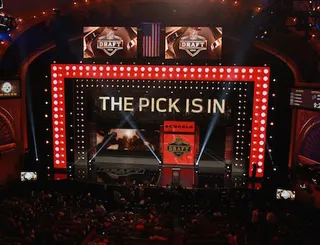
The battles are timed to a big television event for maximum leverage and public relations impact. The thinking is obvious: Dangle the idea of fans missing a big game or event, and suddenly people care.
News Corp. used Fox’s New Year’s Day telecast of the Sugar Bowl as a very effective pawn in its battle with Time Warner. And Disney’s ABC used the highest-rated event telecast in its arsenal: the 82nd Annual Academy Awards.
While Disney-ABC’s deal with Time Warner comes up at the end of August, News Corp. will be at the bargaining table with DISH this fall and Cablevision in October, conveniently during the height of the baseball playoff season. A Yankees playoff series would be the perfect centerpiece for a highprofile battle.
2. RAMP UP THE RHETORIC
Dueling Websites will go up touting the other side’s abject greed. Consumers will be bombarded with TV, radio, print and online ads—and the talent and news arms of broadcast companies will be compelled to take sides.
On her ABC daytime program The View, Barbara Walters warned that viewers could miss the Oscars and her last Oscar special to boot. “This seems unfair,” Walters said. “If this happens, you have options. You can contact Cablevision; tell them you don’t want to lose ABC.”
Regis Philbin and Kelly Ripa also engaged in canned banter about the tussle. “Just a reminder, Cablevision gets paid by the subscribers and Channel 7 is not paid,” Philbin said. And as animated as Philbin can be, he was not the most cartoonish retrans spokesman: In Viacom’s 2008 retransmission battle with Time Warner, Nickelodeon drafted SpongeBob SquarePants to make Viacom’s case against big, bad Time Warner.
“The game has now changed,” CBS Corp. CEO Leslie Moonves said recently. “We used to joke that USA, which is a wonderful network, is getting paid for showing NCIS repeats and we’re not getting paid for showing the original product. If we’re spending millions of dollars on NFL football or CSI, we should get paid as much as a cable network showing repeats.”
And it will get personal. Rebecca Campbell, president and general manager of WABC, gave the family-run Cablevision, which is controlled by James Dolan and was founded by his father, Charles, the Maoist moniker “Dolan family dynasty.”
Cablevision took a page from overzealous fans and cause-oriented guerilla groups by publishing the e-mail addresses of Disney-ABC executives, including President/ CEO Bob Iger, Disney-ABC Television Group President Anne Sweeney, and ABC Sports and ESPN President George Bodenheimer. Executives were bombarded with e-mails, according to sources.
3. HERE COMES WASHINGTON]
Not to be left out of a high-profile kerfuffle and a chance for some free publicity, Washington heavyweights like Sen. John Kerry (D-Mass.) will inevitably weigh in with a wagging regulatory finger—especially, in Kerry’s case, if the Patriots or Red Sox are involved.
Cable companies relish the attention from lawmakers, passing along every statement from beetle-browed legislators worried that constituents will miss out on the big game or the big kudo-fest or Simon Cowell’s Scrooge act. And last week, Time Warner and a coalition of cable operators filed a petition with the FCC asking the agency to reform the retransmission consent process, including interim carriage during contract disputes and independent arbitration.
Democrats and Republicans both drape themselves in the mantle of consumer concern during such disputes. But it is the Democrats who beat the “retrans is broken” drum, while Republicans stand their probroadcast, anti-government-interference ground.
But analysts caution that the public tussle could work against broadcasters and MSOs. “It’s attracting more potential regulatory intervention,” says David Joyce, senior equity analyst at Miller Tabak. “If it is too ugly and too public, they are going to lose control of their business model.”
4. MEET IN THE MIDDLE
In their recent negotiations, News Corp. and Disney were seeking around $1 a month per subscriber from Time Warner and Cablevision, respectively. According to analysts, News Corp. ended up with around 50 cents per subscriber, while Disney got between 25 and 50 cents.
“There is going to be more realization that the market is changing and these deals are going to get done,” says Robin Flynn, senior analyst at media research firm SNL Kagan. “It’s hard to go from zero to a number. Sooner or later, it really just depends on what the economics of the industry are.”
CBS’s successful retransmission negotiations with cable, satellite and telco providers over the past few years have yielded significant cash for the broadcaster. According to Moonves, the company will take in more than $100 million in retrans fees this year, and CBS expects that figure to grow to at least $250 million in 2012.
And Univision expects to bring in more than $350 million annually in additional subscriber fees for retransmission consent.
“The content players to a large extent are clearly flexing their muscles,” one industry analyst points out. “The reality is that content is more important than the method of distribution.”
5. GO BACK TO BUSINESS AS USUAL
Despite all of the threats and calls to action for consumers to switch providers (such as Verizon FioS offering Cablevision customers a $75 discount to switch with the unsubtle tagline: “…never miss an episode!”), consumers tend to take the path of least resistance.
“What will become clear to viewers is that no particular operator is immune to this, so why switch from one operator to another when it could impact the next one six months from now?” says Tom Eagan, senior media analyst at Collins Stewart. “The more these battles become public, the more viewers might see no reason to switch.”
So, if viewers have become privy to the playbook, the warring parties might want to call an audible, negotiate quietly and settle, saving them a lot of time and money—and keeping bigticket programs on the air.
ABC-TIME WARNER CABLE
Deal expires: August 2010
Leverage: ABC does not have any big sports or event programming as a hook for these negotiations, but the debut of the fall TV season is not far off. The season premieres of Desperate Housewives and Grey’s Anatomy are poised to be ABC’s biggest draws. So, discussions between the network and the U.S.’s second-largest cable operator, which already duked it out with Fox over New Year’s, will likely center on the broadcaster’s value in a more general sense.
FOX-CABLEVISION
Deal expires: October 2010
Leverage: The parties made a one-year deal in October 2009 as the Yankees swung through the MLB playoffs. Fox has great leverage with its rights to the baseball playoffs as Cablevision’s 3.1 million subscribers in suburban New York, New Jersey and Connecticut look to follow their hometown team, which will field a powerhouse squad again this year.
FOX-DISH
Deal expires: Fall 2010
Leverage: Just as the MLB playoffs give Fox and Cablevision something to fight over, DISH, too, must face Fox to get baseball coverage to its subscribers, who as of the end of 2009 numbered 14.1 million.
No related content found.
-
No Top Articles
Featured Company
-
Parks Associates
Parks Associates is an internationally recognized market research and consulting company specializing in emerging consumer technology products and services. Founded in 1986, Parks Associates creates research capital for companies ranging from Fortune 500 to small start-ups throug..more