Log In   |  Register Free Newsletter Subscription
Skip navigation
Zibb
Subscribe to Broadcasting & Cable
RSS
Reprints/License
Print
Email

Bob Seidel

CBS' technology test pilot

By Glen Dickson -- Broadcasting & Cable, 4/20/2009 2:00:00 AM

In his 33-year career at CBS, Bob Seidel has been on the leading edge of television technology, developing new equipment and processes that have set standards for the network and affiliates.

In addition to leading the team that switched on the U.S.' first commercial HDTV station—WRAL Raleigh, N.C., in 1996—Seidel has overseen the creation of a DTV transmission facility in the Empire State Building, helped launch CBS' first season of primetime HD and, most recently, devised a way to deliver high-definition satellite newsgathering via CBS' existing satellite bandwidth by using Fujitsu MPEG-4 encoders.

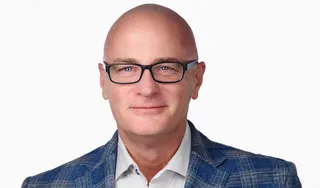
Seidel.jpg“Our method of operation is to evaluate all the technology in the lab, pick the best equipment technology-wise and business-wise, then build a model that all the owned-and-operated stations could use and apply,” says Seidel, now CBS VP of engineering and advanced technology.

Seidel began working in TV technology at Lehigh University, where he was chief engineer for the school's radio and TV stations before graduating with an engineering degree in 1975. After a stint with the Defense Department developing electronic countermeasures and other “super-secret stuff,” he sent his resume to CBS technology guru Joe Flaherty and was hired as a design engineer in 1976. He worked his way up through various positions, including senior design engineer and director of satellite engineering, and relished the time he spent at CBS Labs in Stamford, Conn.

Promoted to CBS VP of television engineering in 1989, Seidel directed the design and installation of the CBS Broadcast Origination Center (BOC) on 57th Street in New York. His pioneering work on the Rapid Deployment Earth Terminal (RADET), the portable satellite uplink system he created, earned him an Emmy Award in 1993. Such portable “flyaway” systems are a newsgathering staple today.

A licensed pilot who flew out to join CBS' Final Four and Masters coverage, Seidel is now focused on identifying small, low-cost camcorders that can be used to convert reality shows like The Amazing Race and small-market CBS stations to HD production. And he looks back with pride on the work he did under Flaherty to make global electronic newsgathering a reality.

Says Seidel, “Those live images have a major impact on society.”—Glen Dickson

RSS
Reprints/License
Print
Email
Talkback
Related Content
Also by BCST Staff

Reed Business Information Resource Center

Featured Company


Most Recent Resources

Advertisement
No content
More Content
  • Blogs
  • Photos
  • Podcasts

Sorry, no blogs are active for this topic.

VIEW ALL BLOGS RSS
Bell Blue

The Schmooze: B&C Hall of Fame Class of 2009

Members of the 2009 B&C Hall of Fame class receive their honors at the Waldorf-Astoria, Oct. 20, 2009.
ZuckerComcast

The Schmooze: 2009 B&C Hall of Fame

Photos from the 19th annual Broadcasting & Cable Hall of Fame gala at the Waldorf-Astoria in New York, Oct. 20, 2009.
News Corp. President and COO Chase Carey at the OnScreen Media Summit 2009

OnScreen Media Summit 2009

Photos from the B&C/Multichannel News day-long event on Oct. 21 at New York's Edison Ballroom. (Photos by Joshua Kristal, www.joshuakristal.com.)

mm160-osms
Advertisement
BC Subscribe
B&C NEWSLETTER
B&C Today
HD Update
Cable Technology
VOD Newsletter
Hispanic TV Update
TechTalk
HD Programming
Multicultural Newsletter
B&C NewsCentral
Television Careers


Please read our Privacy Policy

About Us   |   Advertising Info   |   Submissions   |   Site Map   |   Contact Us   |   Affiliate Links   |   RSS
© 2009 Reed Business Information, a division of Reed Elsevier Inc. All rights reserved.
Use of this Web site is subject to its Terms of Use | Privacy Policy
Please visit these other Reed Business sites